American Dancer: Dancing with Dementia
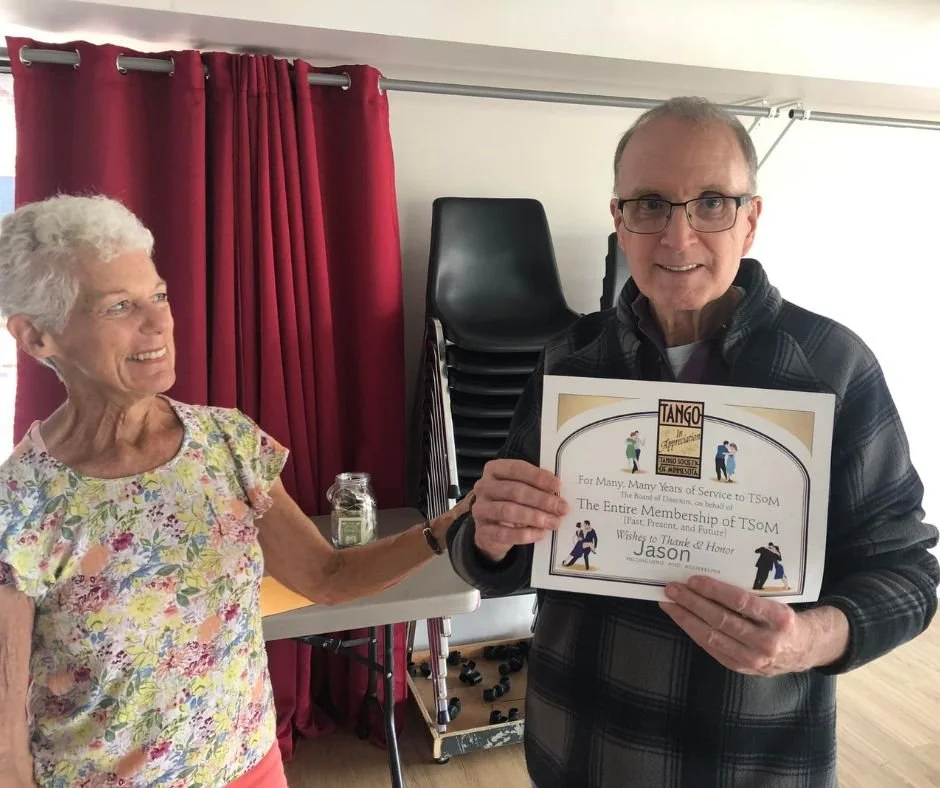
This article originally appeared on American Dancer.
Meet them where they are.
The science is clear. Frequent partner dancing reduces the risk of dementia by 76 percent, more than any other physical or cognitive activity. Dr. Trisha Pasricha, the Ask a Doctor columnist of The Washington Post describes in this video the research that supports that stunning result. Dancing may reduce your risk of dementia by 76%.
But what about the millions of people already living with dementia in our country, as well as their caregivers and families? You meet them where they are. Dance continues to bring them health benefits, joy, and most of all, community.
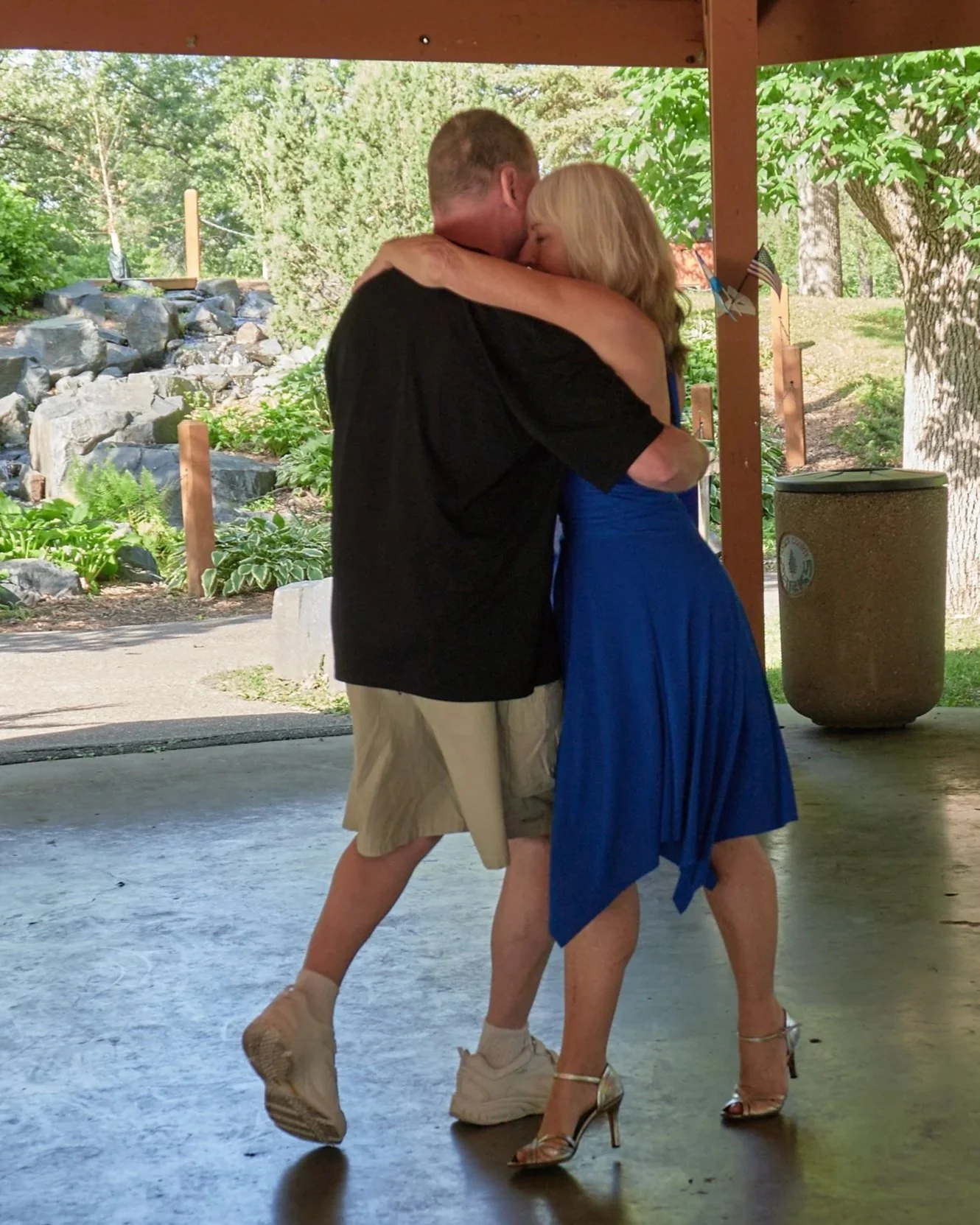
Minnesota dance professional Loisa Donnay did just that for Jason, a 20-year member of her Argentine Tango community (not his real name). Loisa knew Jason as a “very good and dedicated dancer, a good skier, a single guy, and a financial consultant who did well at his job.” But then Jason fell prey to a financial scam and had an unrelated belligerent run-in with police. Both incidents were clearly out of character. His friends and family could tell that something wasn’t right, so they got in touch with Loisa and the Tango community. A lawyer from the community stepped in to help. Yes, community came forward when it became clear Jason was challenged with dementia.
Another friend suggested that Loisa go to Jason’s home to dance. Despite Jason’s two-year break from dancing, it all came back to him. “He’s the leader,” Loisa said. “Somehow, the steps are in his body, in his muscle memory. I don’t know what part of his brain they’re in. I’m not an expert at this. He takes a woman into his arms, he hears the music, and he starts to move and walk. It’s such a learned behavior that it works.”
Jason was later relocated to a group home, where Loisa still visited him once a week. She often brought other members of the Tango community to dance with him. Even though Jason had little short-term memory, he could remember Loisa and other friends from his dancing past. He could recognize the dance music; he knew the songs and orchestras. All was still a big part of his memory.
“It’s remarkable, even if he isn’t able to learn new steps. Sometimes the only thing I can do is correct some steps, remind him why that step didn’t work, and maybe show how he could do it this way,” Loisa said. “I don’t try to teach him anything new. He’s not interested in that. He’s interested in just playing with the music and dancing whenever or whatever he can.”
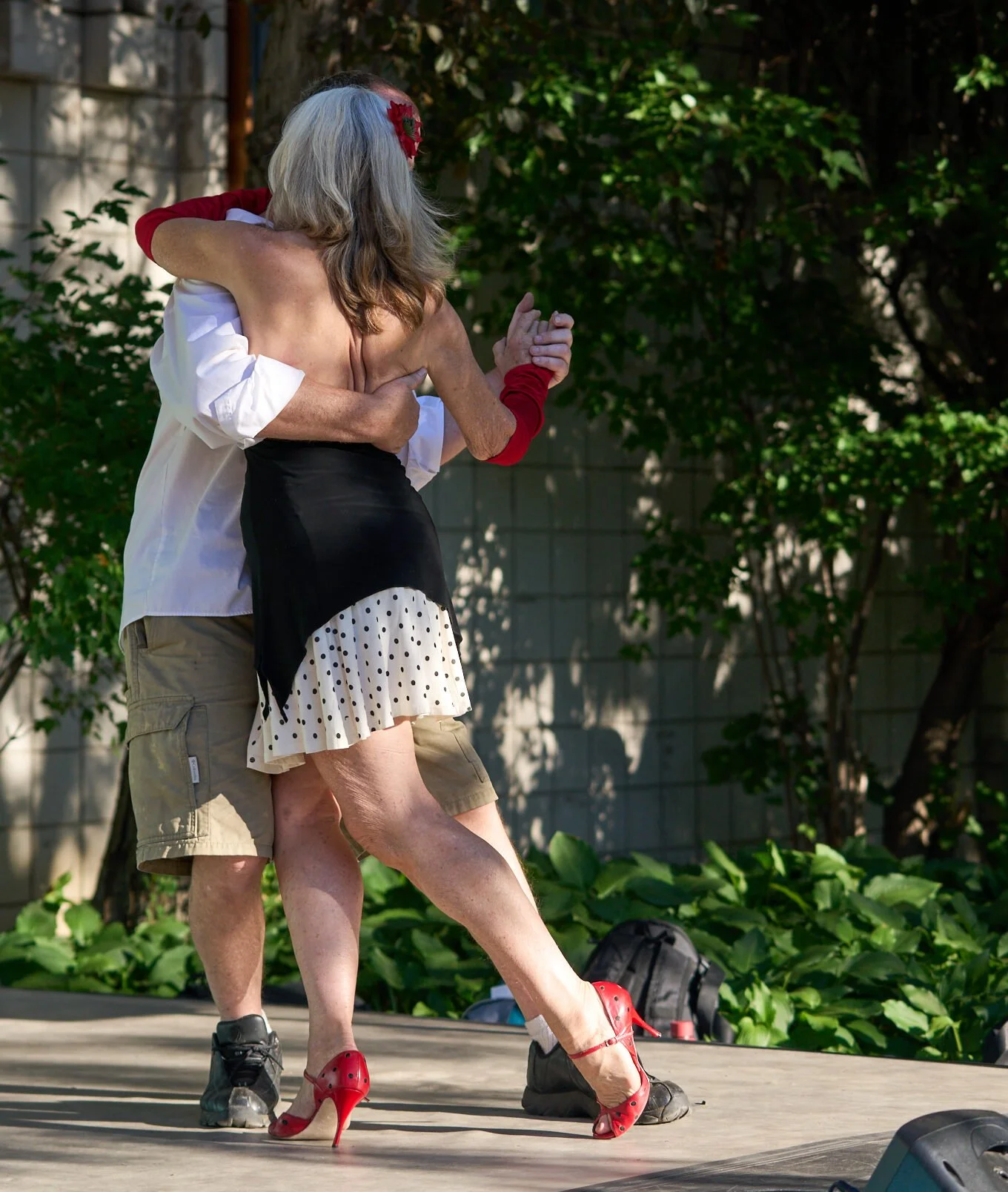
Jason’s story is a beacon of hope for all dancers.
“What I’m saying is that dance is a hobby that stays with you through thick and thin,” Loisa said. “When all other abilities go away, you might still be able to dance. And there is the wonderful advantage of a dance community. People who you know as honest will remember you, will surround you, will come to your aid, and will have expertise. There’s an honesty there that you may not find if you just googled for an attorney, for example.”
The experience has been rewarding for both partners. “I’m just brightening his day a little bit. That’s really my scope here. I have no training for this, so I don’t know if I’m helping in a clinical way. All I know is I’m going over there and he’s happy to see me. He’s happy to see anyone I bring along. I do feel I’m improving his quality of life. There’s a benefit I’m giving him.” Because residents in his new care home have little chance for exercise, Loisa believes that dancing has also helped his mobility.
“His reaction as soon as I turn on the music is still wonderful to see,” Loisa said. “He visibly brightens and moves with the rhythm. He reaches for anyone around him to dance, to the delight of his caregivers. One of his caregivers was even inspired to start dance lessons!”
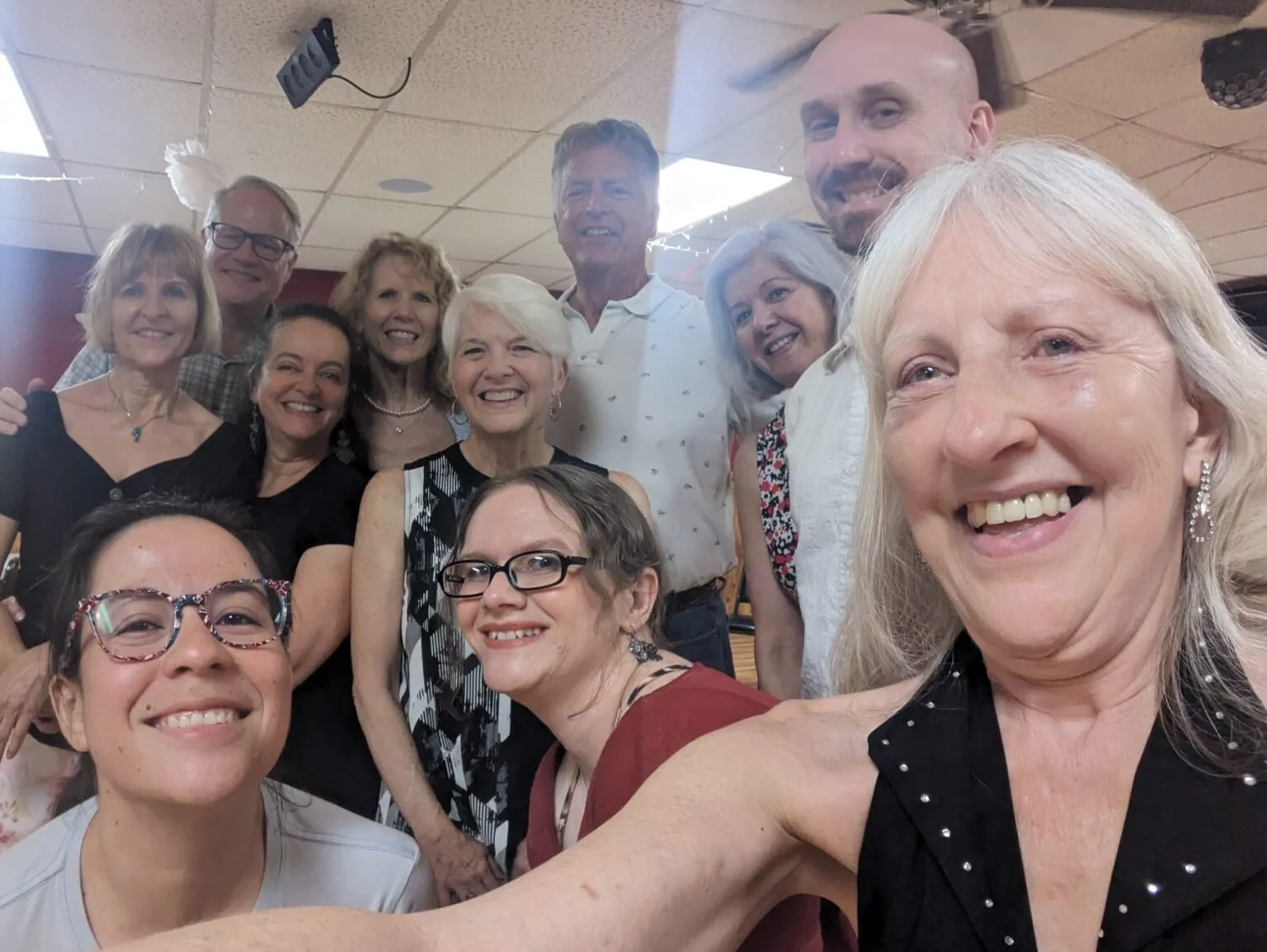
Loisa teaching in Nebraska.
This is just one such story from my book, The Dance of Resilience. There are others. We need many more Loisas willing to give their gifts and talents to people living with dementia. They are out there, I know; I recount how some local studios have successfully led programs in partnership with the Alzheimer’s Association. But the challenges of sustaining funding and volunteer support for such programs are great. Most did not survive the pandemic.
How do we scale up this much-needed contribution to community health when the lifetime risk of dementia after age 55 is 42 percent? Enter Dance Vision Foundation founders Wayne and Donna Eng and ballroom dance professional and judge Maria Hansen. They have created curriculum and an outreach program to serve people with dementia on the west coast. They want to grow.