American Dancer: “I Don’t Know What ‘Like This’ Is”
This article originally appeared on American Dancer.
By Ember Reichgott Junge. Photos courtesy of Lisa Davis and Ember Reichgott.
Another remarkable story of resilience by Ember Reichgott Junge.
I couldn’t help but admire Lisa Davis as she danced her lyrical solo showcase with her instructor Derek Pasqualatto at the Day of Dance event May 2 at the Des Moines Ballroom, owned by Tallis Strub. She started with an elegant stretch to the audience before she faced her partner for swivels, prior to closing into frame for her International Foxtrot. Then she moved into shadow with Derek as she focused on the audience.
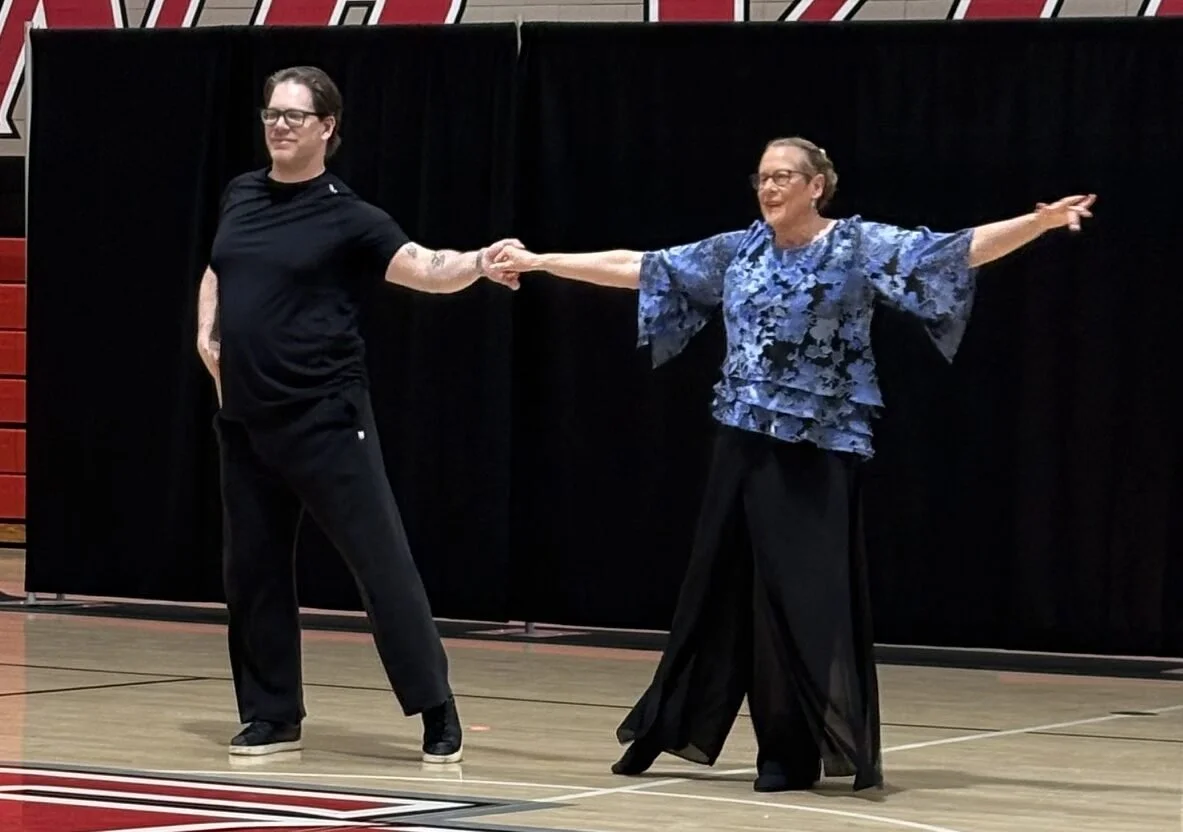
Lisa Davis and her instructor, Derek Pasqualatto, at the Day of Dance event in the Des Moines Ballroom.
I got to dance with Lisa myself earlier in the day during a coached workshop where she was the leader, and I was the follower. Lisa has filled in as a leader, for years, at her studio. And I mean for years. She was one of a small group of people who, years ago, took leadership to save the studio when the original pros and owners were about to close it in 1990. She took over the music, organized social dances, helped bring in visiting instructors, and encouraged fellow students to compete in competitions with her. I first met her at a Snowball Dance Competition in the Twin Cities where we bonded instantly when she shouted encouragement to me on the dance floor, though we had barely met.
And did I say that Lisa has been blind since the age of 18?
It was a privilege to interview Lisa for my book, The Dance of Resilience. Her story, “I Don’t Know What ‘Like This’ Is” recounts how Lisa was not only the student, but by necessity the teacher, gently guiding her dance professional Markus Cannon to try new and different ways to describe movements so she could visualize them.
It is a remarkable story of resilience for both of them.
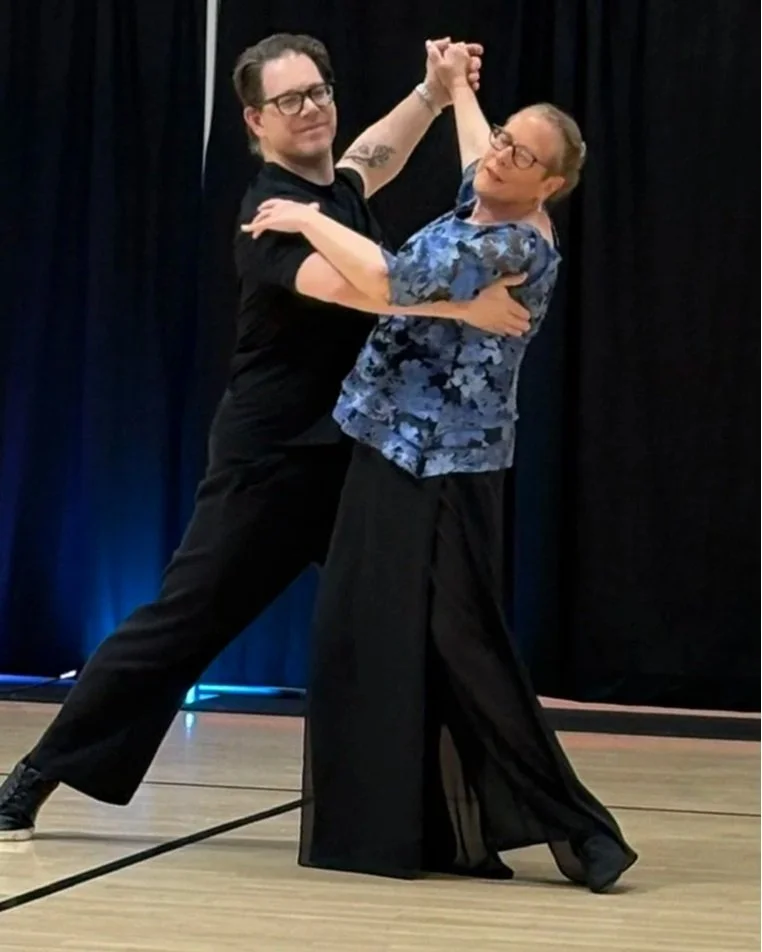
Lisa Davis and Derek Pasqualatto demonstrate a lovely oversway.
Lisa lost her vision suddenly and unexpectedly when she was in graduate school at the University of Iowa. She was finishing her doctorate degree in Auditory Physiology.
She was studying in the library when she thought there was a problem with the lighting. She drove home not realizing she lost some vision.
The next day she drove to work at the hospital clinic where she registered a woman—ironically—for the eye clinic. She needed to run her papers, so Lisa stood up, turned around, and bumped right into a pillar.
“I didn’t see that pillar. When you lose your vision, you don’t realize it happened. People think it’s like seeing dark or black. That’s not what it’s like. There’s nothing there.”
Lisa never drove her car again. Today, she has a very narrow field of vision in one eye. “It’s like looking through a soda straw,” she described.
She had no vision in her other eye.
The underlying cause, Lisa explained, came from being born three months premature and receiving too much oxygen, which caused retinal damage. She was a pound and a half at birth.
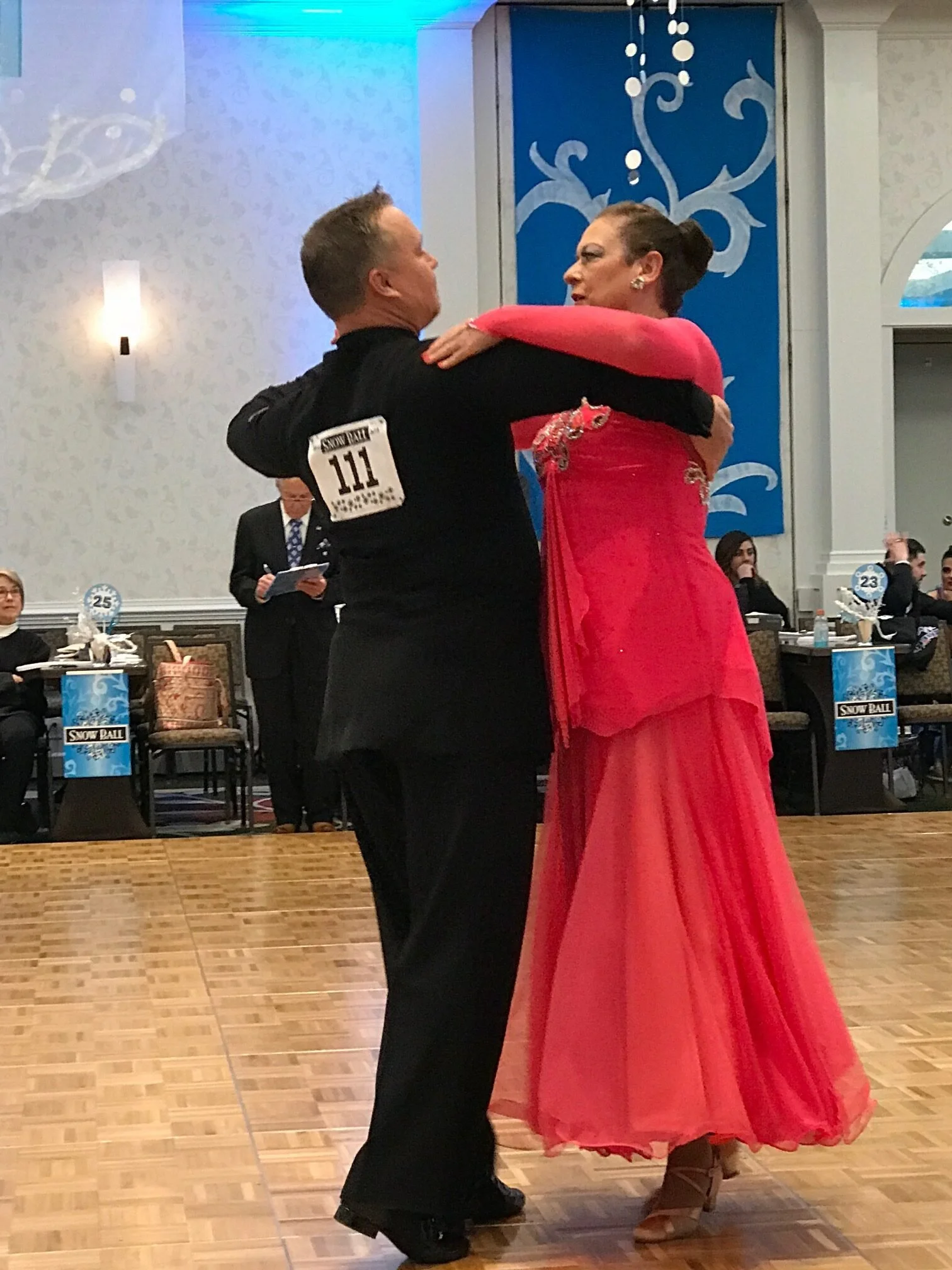
Lisa Davis and her instructor, Markus Cannon, in competition. Lisa has been blind since the age of 18.
“I knew I had underlying issues, but I never thought it would result in losing vision altogether,” she said.
Lisa had to change her career. As a newly blinded person, she enrolled in training through the Iowa Department for the Blind and, upon completion, was hired by the Department for its adult Orientation Center. That’s where blind persons develop positive attitudes and self-confidence about blindness and learn how to do things without vision. Lisa taught Braille and computer technology, just as computers were brand new on the scene.
That was the start of a 30-year intense career in IT for the state of Iowa. She was on call 24/7. She slept with her Blackberry. I never imagined that a blind person could have such a successful career in IT. But Lisa did it.
So in 1986, Lisa was open to an invitation from a female friend to attend a dance studio function in Des Moines. She had never danced a step. But soon dancing, especially the Friday night parties, became her one true form of escape from work. And it made a “tremendous difference” in her posture, from years of computer work.
When the studio in Des Moines was about to close, Lisa and nine others stepped in to save it. They paid expenses, took ownership as a corporation with a board of directors, and managed operations from hiring dance instructors to cleaning the studio.
And Lisa fit right in. “The dance community in Des Moines had a wonderful group of people who could readily relate to me,” Lisa said. “If they sense you’re OK with your blindness, that it’s nothing more than a physical characteristic like blue eyes or brown hair, they, in turn, become more comfortable. You quickly learn to ask for assistance easily and simply, and people catch on quickly.”
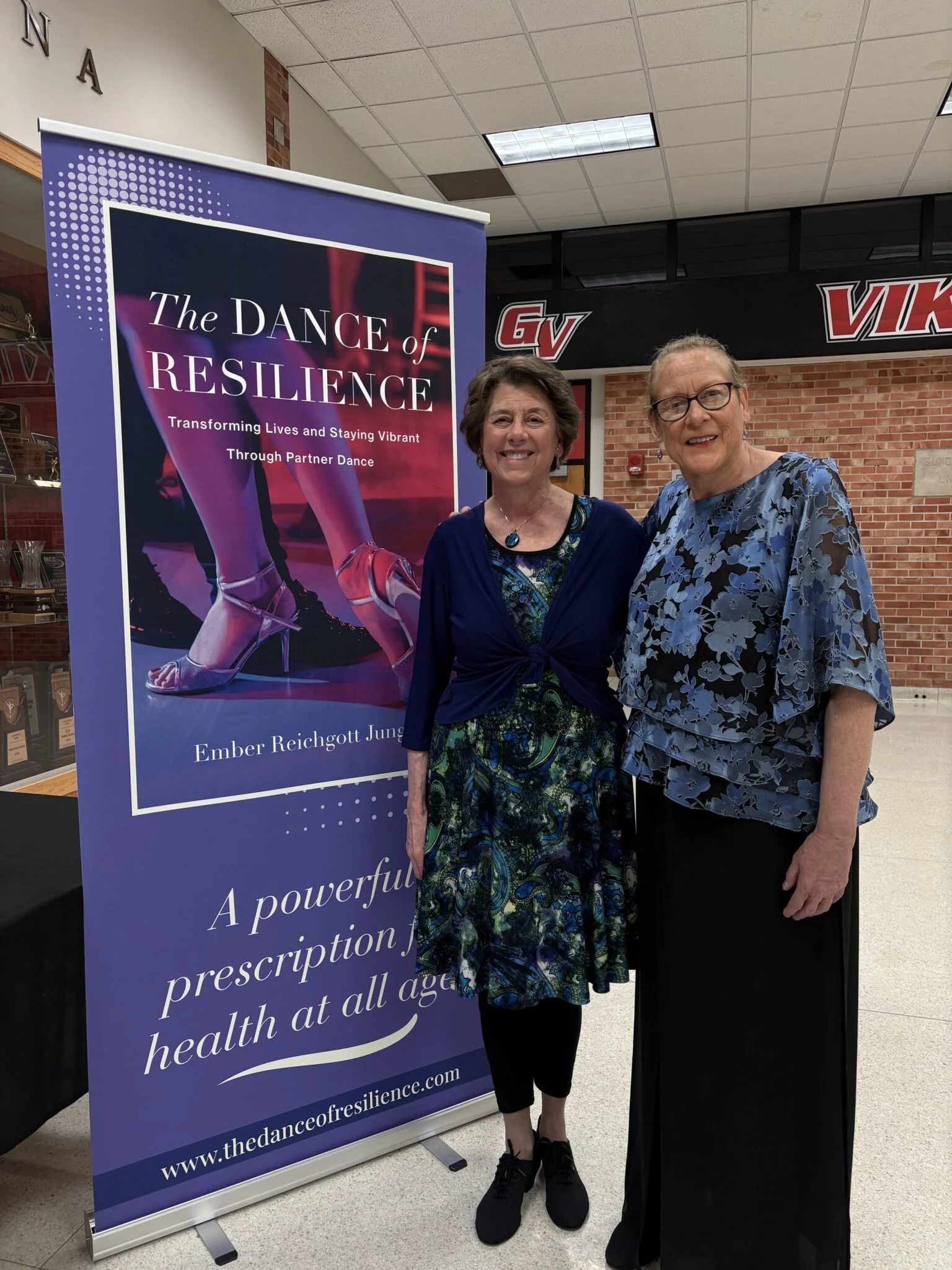
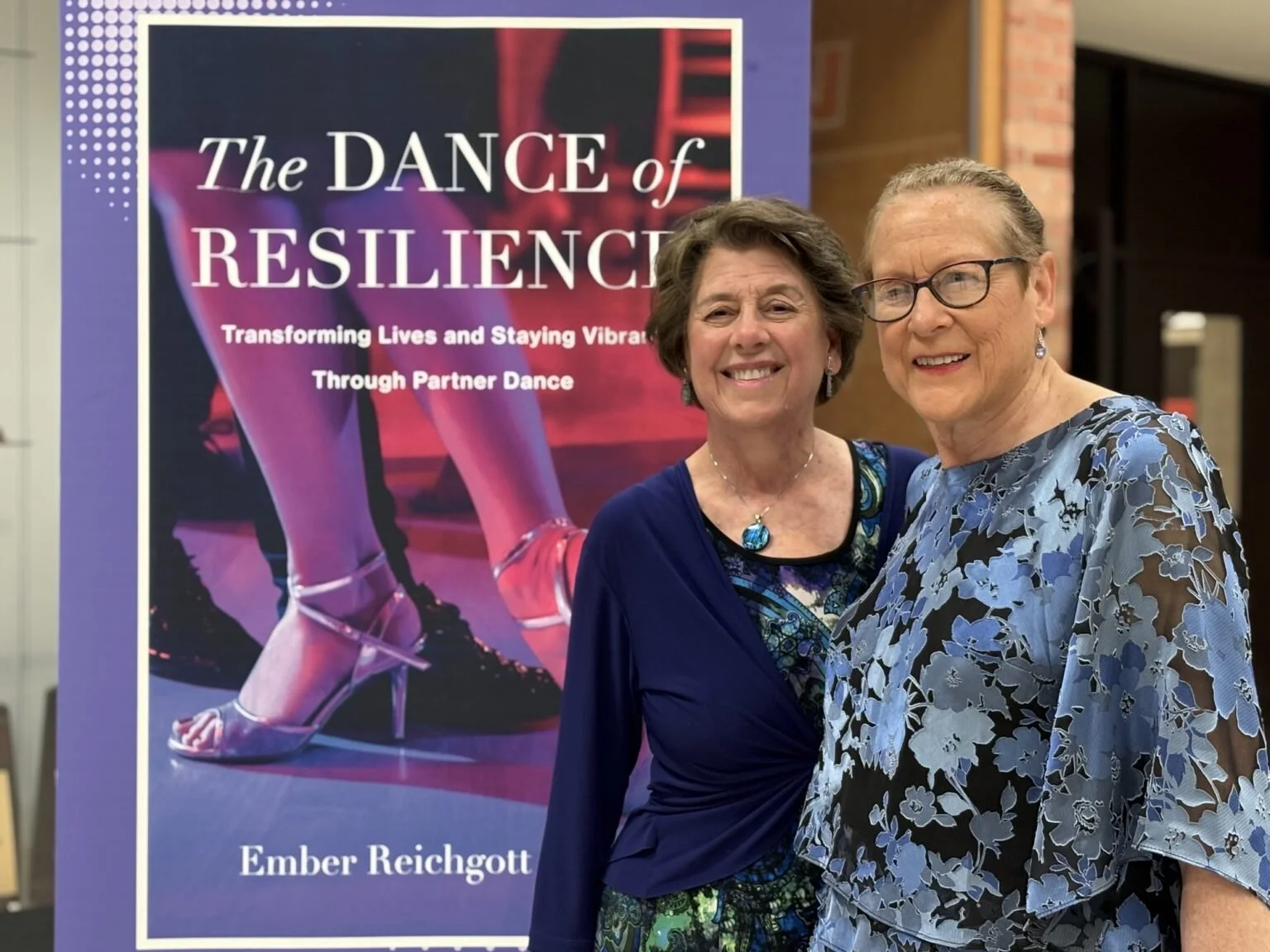
Author Ember Reichgott Junge with Lisa Davis.Thank you both for inspiring us all!
Lisa has endured other setbacks, including a serious car accident in 2000, leading to a hip replacement. She was hit while crossing the street to catch a bus to go to work. She lost an eye and had a tooth implant.
As if that wasn’t enough challenge, Lisa also suffers from Ménière’s Disease, which attacks her vestibular system and balance. Today, she continues to exercise to restore balance and “get my pieces and parts” back on track.
When Markus retired from dancing, Lisa needed another instructor. There were no experienced male professionals in Iowa. She started dancing with Derek four years ago, because he traveled from Omaha, Nebraska to Des Moines to teach. For the last year, however, Derek’s schedule changed, and Lisa and another student drove a round-trip four hours each week to continue taking lessons from him in Omaha, Nebraska.
Now that’s dedication.
So many setbacks, yet such positivity. Now in her mid-70s, Lisa commits to dance, exercises for hours per day, and practices at home.
Lisa, you’ve rooted for all of us. We are rooting for you—on and off the dance floor. You inspire us with your perfection and beauty—both inside and out.